Why Your Commodity Coffee Tastes Boring - Good Coffee Has More Flavor Than You Think
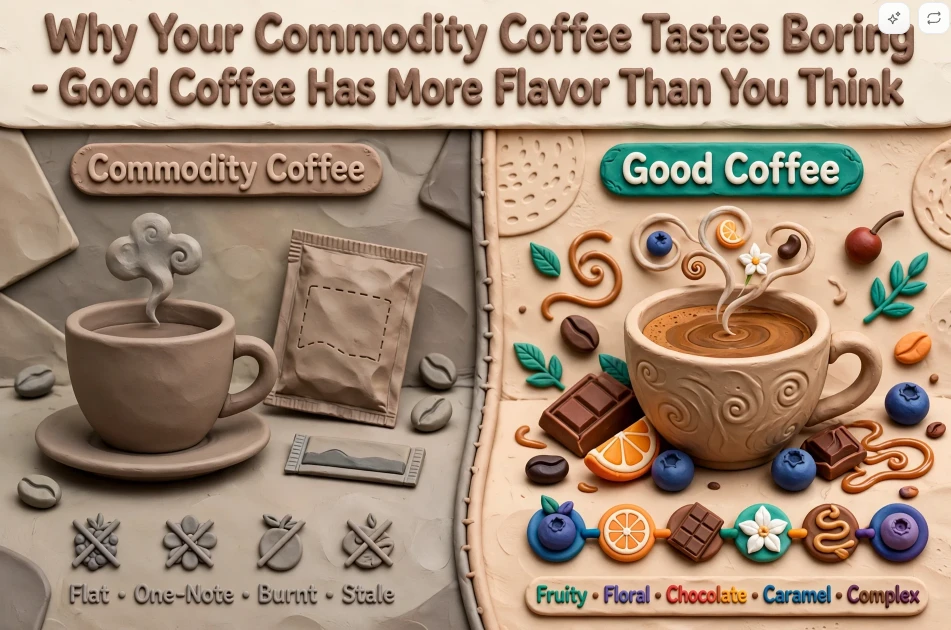
Quick Summary: Commodity coffee tastes flat and burnt because it's blended from cheap beans, roasted dark to hide defects, and sits in warehouses for months, losing most of its aroma within three weeks of roasting. Specialty coffee, scoring 80+ on the SCA scale, offers real flavors like fruit, chocolate, and florals, and costs only 30-50 cents more per cup when brewed at home. The biggest fix is buying fresh, small-batch roasted beans with a roast date, like those from Just Roasted Coffee, rather than relying on grocery bags.
If your morning cup tastes like burnt toast and bitterness, your brewer probably isn't the problem. Commodity coffee is bought for scale, roasted dark to hide flaws, and shelved long past its prime. Good coffee should offer citrus, caramel, chocolate, even florals, and coffee tasting notes that shift as the cup cools. The catch? Specialty coffee beans cost more, and it's fair to wonder if they're truly better or just better marketed. This comparison follows the bean from farm to cup - sourcing, roasting, freshness, and price - so you can find the best tasting coffee for your routine. Fresh roasted wins on flavor; grocery bags still win on price and predictability.
Table of Contents
Specialty Coffee vs Commodity Coffee: At a Glance
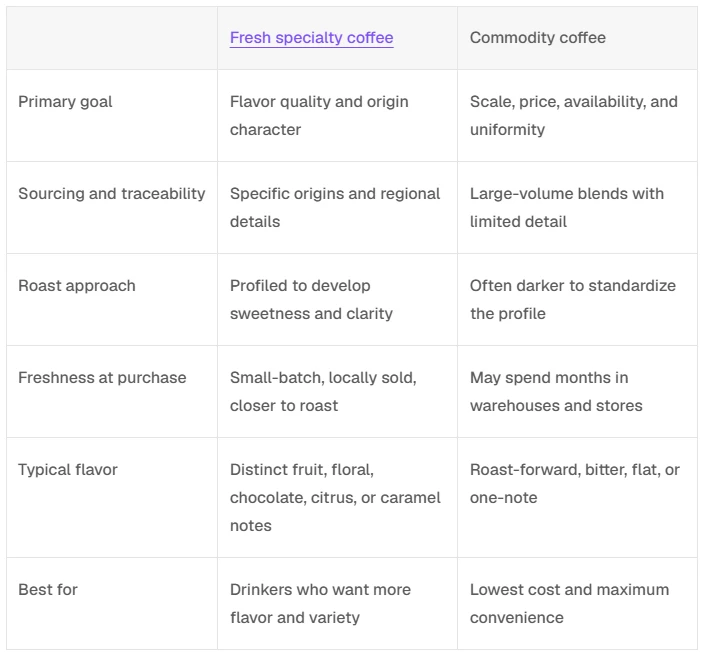
How Fresh specialty coffee and Commodity coffee Compare
Fresh specialty coffee
Small-batch roasted beans picked for specific origins and roasted to bring out sweetness and clarity. It's for drinkers who want good coffee with real fruit, chocolate, or floral notes instead of one flat taste. Roasters like Just Roasted Coffee sell it close to the roast date, so flavor is still at its peak.
Fresh specialty coffee
Key strengths:
- Distinct origin character and traceable sourcing
- Profiled roasting for sweetness and clarity
- Small-batch, locally sold, fresher at purchase
Commodity coffee
Mass-produced coffee built for low cost, wide availability, and a consistent cup every time. It's for shoppers who want the cheapest bag on the shelf without thinking about it. Beans are blended at large volume and often roasted dark, which flattens flavor into something bitter and one-note.
Key strengths:
- Lowest price per cup
- Sold everywhere, easy to find
- Predictable, uniform taste
How Specialty Coffee Is Different From Commodity Coffee
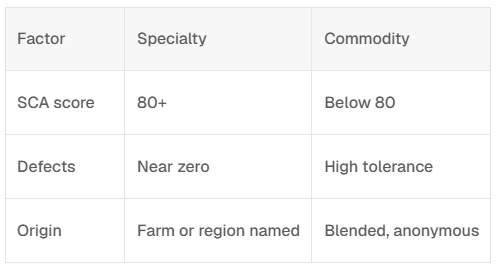
Specialty coffee is not a buzzword. It is a grade. Under the SCA's 100-point system, coffee scoring 80 or higher counts as specialty, while anything below is commodity grade. That gap reflects two very different supply chains, from farm to bag.
Quality Starts Before Roasting
Specialty-grade green coffee must pass a strict inspection: zero primary defects and no more than five secondary defects in a 350-gram sample, then a blind cupping test by certified tasters. Most supermarket blends score 65 to 79, blended and roasted dark to hide flaws. Small roasters like Just Roasted Coffee start with the top tier instead, so the flavor is already in the bean before heat touches it.
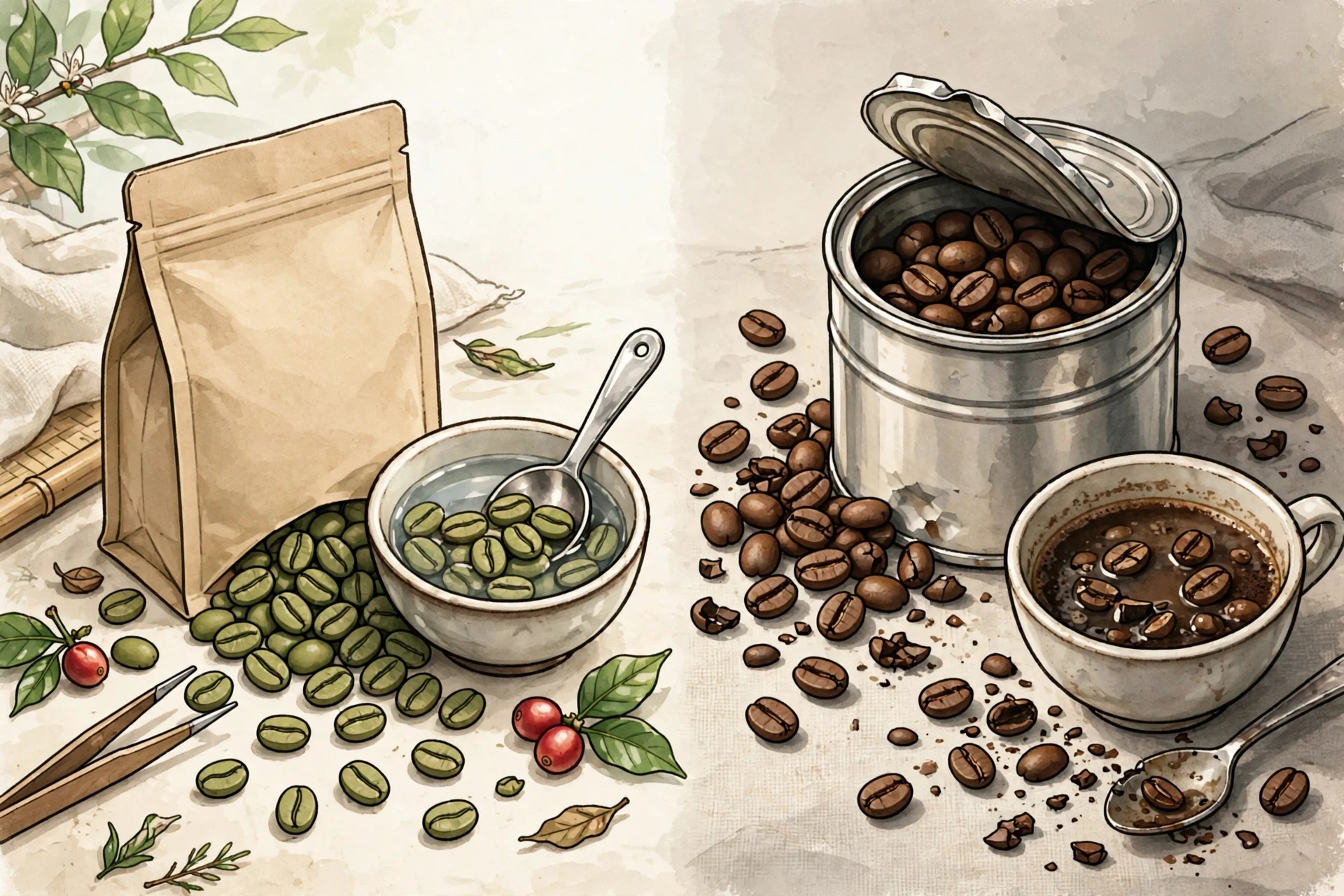
Specialty coffee bag beside plain grocery can
Commodity Coffee Is Built for Scale
Big brands optimize for volume and price, not taste. Beans from many farms get mixed into one giant blend, so every bag tastes the same and no farm's character survives. Dark roasting covers the inconsistencies. Consistency and cost win; flavor loses.
Also Read: Exploring Specialty Coffee A Guide To The Finest Beans
Why Commodity Coffee Often Tastes Flat, Bitter, or Burnt
Grocery coffee isn't badly made. It's made to a different goal: cheap, consistent, and drinkable at massive scale. Flavor is the first thing traded away.
The Roast Can Hide More Than It Reveals
Big brands often buy low-grade beans, blend everything together, and roast it dark. That dark roast is the trick. Push a bean far enough and it turns smoky and bitter, which covers defects like staleness, damage, and off flavors. The problem is that it also covers everything good: the fruit, the chocolate, the sweetness. Researchers have found that darker roasts build far more bitter compounds, like phenylindanes, than medium roasts. So the char becomes the whole cup, and every bag tastes like carbon.
Consistency Is Not the Same as Complexity
A big brand wants the coffee in New Jersey to taste exactly like the coffee in California. That means flattening every difference between farms, harvests, and countries. Uniform, but boring.
Specialty roasters work the other way. A small-batch roaster like Just Roasted Coffee roasts each lot to highlight what makes it unique, not to erase it.
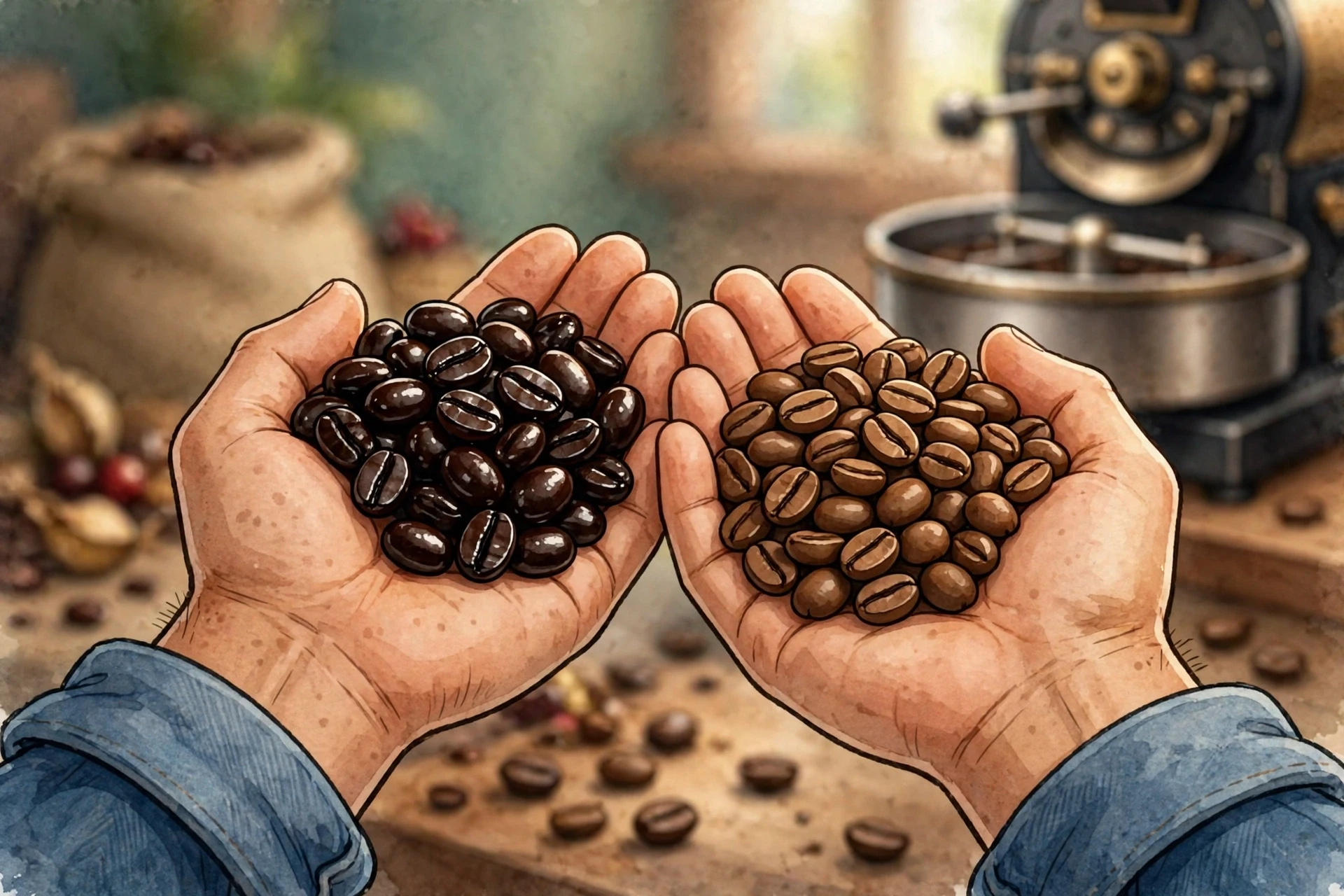
Roaster comparing glossy and matte coffee beans
Also Read: A Beginner S Guide To Finding The Best Small Batch Coffee
Freshness Is the Biggest Difference You Can Taste
The Shelf Life Problem
Coffee smells amazing the day it's roasted. That doesn't last. According to the Specialty Coffee Association , whole bean coffee loses most of its freshness within about three weeks of roasting. Grocery coffee sits in warehouses and on shelves for months before you buy it. By then, the good stuff is gone. That's why the bag smells better than the cup ever tastes.
How to Buy Coffee Near Its Peak
You don't need expert skills to fix this. Just check three things:
- Look for a roast date, not a "best by" date.
- Buy whole bean, not ground. Ground coffee goes stale in about an hour.
- Buy small amounts from a local roaster so you finish the bag within weeks.
At Just Roasted Coffee, we roast in small batches and ship fast, so New Jersey customers get beans while they still taste alive. That one change beats any fancy gear.
Also Read: 12 Essential Specialty Coffee Jargon Terms For Beginners
What Good Specialty Coffee Actually Tastes Like
Boring commodity coffee tastes like one thing: burnt. Good coffee tastes like a dozen things at once. Bright fruit, cocoa, flowers, brown sugar, sometimes all in a single sip. It's not marketing talk. Roasted coffee holds over 1,000 aromatic compounds, and a fresh, well-grown bean lets them show. A dark, stale roast buries them.
Reading Coffee Tasting Notes Without Feeling Lost
Tasting notes like "blueberry" or "jasmine" aren't invented. They come from the Coffee Taster's Flavor Wheel , a shared vocabulary built by the Specialty Coffee Association and World Coffee Research. Start at the center and work outward: fruity, then berry, then blueberry. You don't need a trained palate. Just ask yourself, "What does this remind me of?" and get more specific each sip.
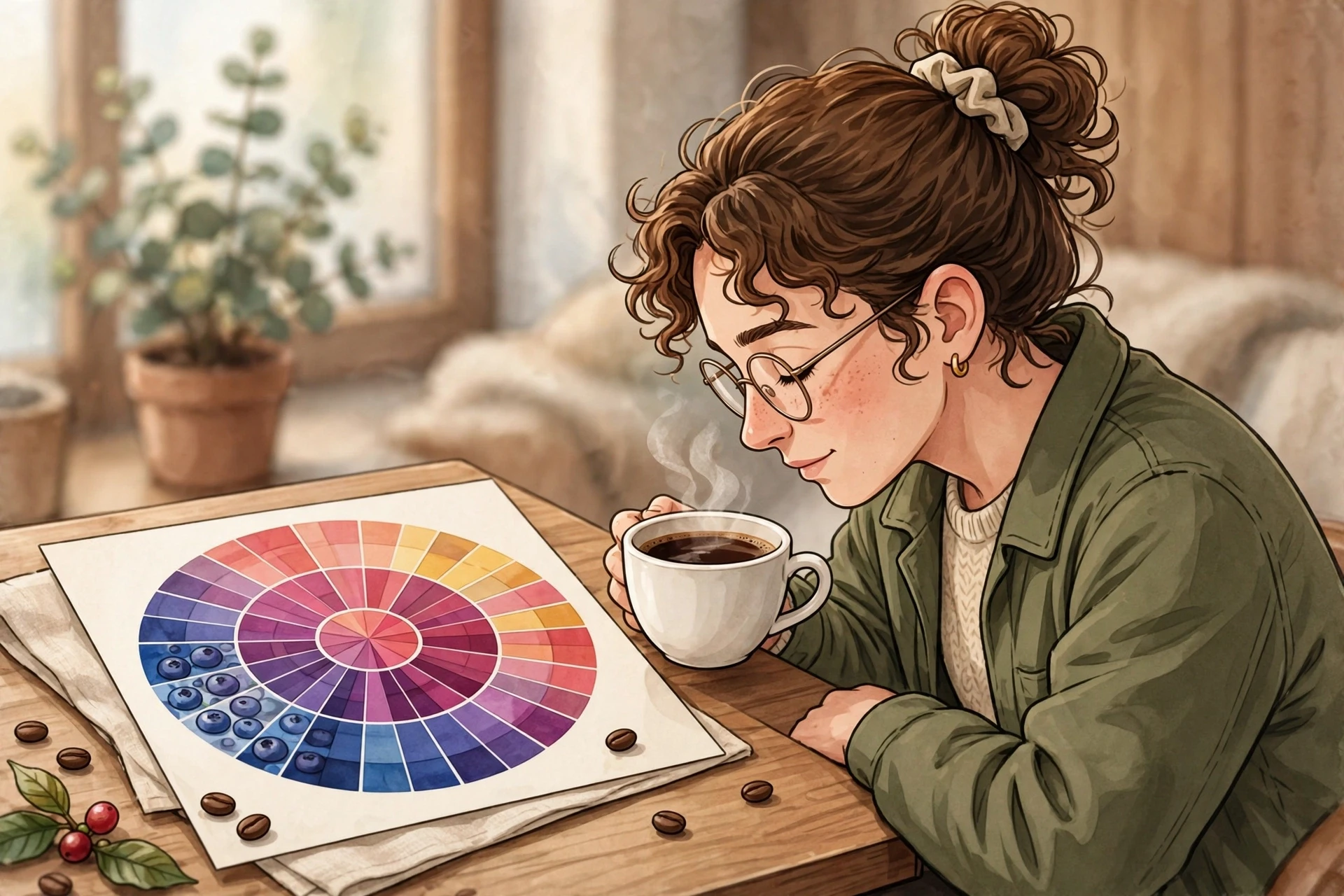
Sniffing coffee beside a colorful flavor wheel
Origin and Process Shape the Cup
Where a coffee grows sets the baseline. Ethiopian coffees lean floral and berry-like , while Brazils lean chocolate and nut. Processing adds another layer: washed coffees taste clean and bright, natural-processed ones taste fruitier and sweeter. That's why single-origin coffees from small roasters like Just Roasted Coffee taste so different bag to bag. Each one carries its farm's fingerprint, not a blended average.
Also Read: Is Your Retail Coffee Truly Fresh Roasted Heres How To Tell
Is Specialty Coffee Worth the Price?
Usually, yes - but the sticker price misleads people. Judge it per cup, not per bag.
What You Are Paying For
Specialty coffee isn't just a fancy label. It's a grade: beans scoring 80+ on the Specialty Coffee Association's 100-point scale . You're paying for hand-picked ripe cherries, zero major defects, traceable farms, and small-batch roasting done days - not months - before you brew. That's real labor and shorter supply chains, not marketing fluff.
A Better Way to Compare Cost
A 16specialtybaglookspriceynexttoan16 specialty bag looks pricey next to an 16specialtybaglookspriceynexttoan
8 grocery can. But a 12oz bag makes roughly 22-25 cups, so the gap is only 30-50 cents per cup . Compare that to a $5 café run. Also note: stale grocery coffee tastes weak, so you use more grounds per pot. Fresh beans stretch further.
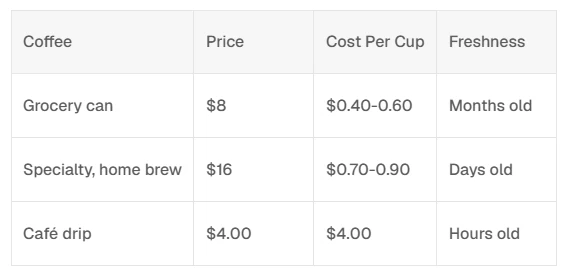
That's the deal: for less than a dollar a cup, you get beans roasted within days of shipping. At a local roaster like Just Roasted Coffee, small batches mean the bag you buy was roasted this week, not warehoused this quarter.
Also Read: Over Roasted Coffee Beans
Which Coffee Should You Choose?
Choose Fresh Specialty Coffee If You Want More Flavor
Pick specialty when taste is the point. These beans score 80 or higher on the Specialty Coffee Association's 100-point scale , come from named farms, and get roasted in small batches within days of shipping. You taste actual flavors: chocolate, fruit, floral notes. Local roasters like Just Roasted Coffee in New Jersey roast this way, so your bag is fresh, not warehoused.
Choose Commodity Coffee If Convenience Comes First
Grocery coffee has its place. It's cheap, sold everywhere, and blends from many origins into one predictable, familiar taste. Most supermarket bags score below 80 points , sit for months before you buy them, and lean on dark roasting to hide defects. If you drink your coffee drowned in cream and sugar, it works. Just know what you're trading away: freshness, traceability, and nearly all real flavor.
Homepage
Tired of flat, stale coffee? Just Roasted Coffee roasts small batches in New Jersey, so your beans arrive fresh and full of flavor. Taste the difference today.
Frequently Asked Questions
Q1: How is specialty coffee different from commodity coffee?
Specialty coffee scores 80+ points for flavor and traceable origin. Commodity coffee blends cheap beans from a few countries, then roasts them dark to hide defects.
Q2: Why is gourmet coffee worth the price?
You pay for fresh roasting, better beans, and real flavor. A cup still costs less than a cafe visit.
Q3: What does specialty coffee taste like?
Expect blueberry, chocolate, citrus, or caramel notes - not just "coffee." Fresh single-origin beans taste like where they grew.
Q4: How fresh should coffee be?
Buy beans roasted within the last few weeks. Just Roasted Coffee roasts in small batches, so flavor stays at its peak.
Conclusion
Boring coffee isn't your fault. Big brands buy cheap beans from the same few countries, roast them dark to hide flaws, then let them sit in warehouses for months. Freshness science shows most aroma fades within about three weeks of roasting, so stale grocery coffee was flat before you ever brewed it.
The fix is simple: know the origin, respect the roast, and buy fresh. Research on coffee staling confirms what your taste buds already knew. A locally roasted, small-batch bag from Just Roasted Coffee tastes the way coffee was meant to taste.