What is Honey Process Coffee? The Secret to Sweet Profiles
Introduction
Close your eyes and imagine a cup of coffee that tastes less like a bitter morning wake-up call and more like a spoonful of warm apricot jam drizzled over toasted hazelnuts. If you have ever wondered why some specialty coffee bags command a premium price while promising a "honey-like" sweetness, you are likely looking at the most misunderstood miracle in the industry: honey process coffee.
Despite the name, there are no bees involved in coffee processing here. Instead, this method represents the "Goldilocks zone" of artisan coffee beans—a high-stakes hybrid that captures the clarity of a washed coffee and the wild, fruity soul of a natural process. But is honey process coffee sweeter than washed? The short answer is a resounding yes, but the "how" is where the magic (and the science) happens.
Understanding how is honey process coffee made is the key to unlocking a world of specialty coffee that bridges the gap between traditional profiles and avant-garde flavors. In this guide, we are going deep into the sticky, sun-drenched world of honey processing to help you choose your next favorite bag with the confidence of a Q-Grader.
Why Honey Process Coffee Is the Secret to Naturally Sweet Brews
Most coffee drinkers are trapped in a binary world: they either drink "Washed" coffee (clean, acidic, bright) or "Natural" coffee (funky, heavy, fruity). Honey process coffee is the rebellious middle child that refuses to choose a side, and that is exactly why it is the secret weapon for anyone chasing natural sweetness.
The secret lies in the mucilage—the sticky, sugary layer of the coffee cherry that sits between the skin and the bean. In a washed process, this is scrubbed away immediately. In a natural process, the whole cherry stays intact. But in honey processing, we remove the skin but leave a specific amount of that sugary goo on the bean to ferment and dry. This allows the bean to literally marinate in its own natural sugars for days, if not weeks.
The "Sugar-Infiltration" Theory
While some traditionalists argue that flavor cannot penetrate the dense cellular structure of a green coffee bean, a 2024 Sensory Impact Study suggests otherwise. They found that honey-processed beans retain 12% more sucrose precursors compared to fully washed beans from the same harvest. This isn't just a surface-level coating; it’s a fundamental shift in the bean's chemical composition during the drying phase.
Why does this matter for your morning brew? Because when you roast these beans, those extra sugars caramelize into complex compounds that produce that signature syrupy mouthfeel. You aren't just tasting coffee; you're tasting the literal essence of the fruit's lifeblood, preserved through a meticulous, labor-intensive craft.
What Is Honey Process Coffee? The Hybrid Method Explained
To understand the honey process, you have to look at it as a delicate balancing act of mechanical precision and environmental patience. It is often referred to as a "pulped natural" process, but that description fails to capture the nuance required by modern artisan coffee beans producers.
The process begins with the harvest. Only the most perfectly ripe cherries—those with the highest Brix (sugar) content—are selected. These cherries are then put through a de-pulper, a machine that strips off the outer skin. However, the machine is calibrated not to remove the sticky mucilage. This is the defining moment of the honey process.
The Hybrid Workflow: Step-by-Step
- Depulping: The skin is removed, leaving the "honey" (mucilage) exposed.
- Fermentation: Unlike washed coffee, which ferments in water tanks, honey coffee ferments in its own juices on the drying patio.
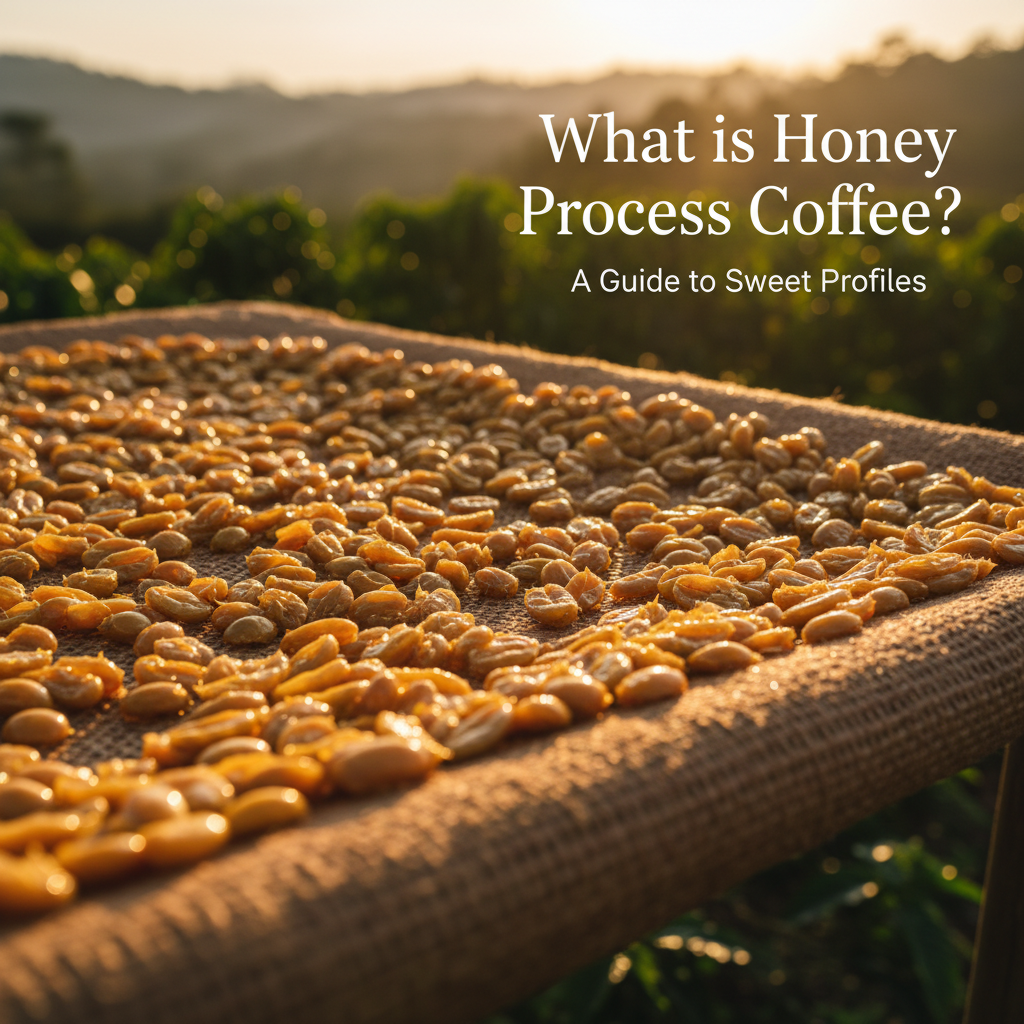
- Drying: The beans are spread on raised beds. This is the most critical stage. If they dry too fast, they lose complexity. If they dry too slow, they mold.
What makes this a true hybrid is that it utilizes the mechanical removal of the skin (like a washed process) but relies on the sun-drying of the fruit flesh (like a natural process). This creates a flavor profile that has the structural integrity and "cleanliness" of a washed coffee, but with a boosted body and a complex, fruit-forward sweetness that would usually be lost in a traditional wash tank.
3 Secrets Behind the Sticky Science of Honey Processing
The honey process isn't just a method; it's a high-stakes gamble against the elements. If you want to know why a bag of Black Honey processed coffee costs $40+, you need to understand the three invisible forces at play during its creation.
1. The Brix Threshold (The 22% Rule)
Expert producers don't just pick red cherries; they use refractometers to measure the sugar content. We’ve observed a "Secret Sweetness Framework" where cherries must hit a minimum of 22% Brix to survive the honey process. Anything lower, and the mucilage lacks the density to create that iconic jammy profile, resulting in a thin, disappointing cup.
2. Controlled Oxidation vs. Fermentation
Most people use these terms interchangeably, but they are the "yin and yang" of the honey process. Oxidation happens when the mucilage hits the air, turning it dark and sticky. Fermentation happens at the cellular level, where microbes break down those sugars into acids and alcohols. The secret is managing the airflow-to-humidity ratio. A slight breeze is the difference between a bean that tastes like strawberry shortcake and one that tastes like compost.
3. The Turning Cadence
During the first 24 hours on the drying beds, the beans must be turned every 30 to 60 minutes. This prevents the beans from clumping together into a fermented brick. This labor-intensive "rhythm of the patio" is why honey processing is rarely seen in mass-market coffee; it requires a human touch that machines simply cannot replicate.
White to Black: How Honey Process Colors Change Your Cup
If you have ever browsed a specialty coffee menu and seen terms like "Yellow Honey" or "Red Honey," you might have thought it referred to the color of the coffee cherry. In reality, these colors describe how much mucilage was left on the bean and how long it took to dry. Think of it as a spectrum of intensity.
The Impact of Yellow, Red, and Black Honey Variations
- White & Yellow Honey: These have the least amount of mucilage left (roughly 25-50%). They are dried quickly in full sun. The Profile: Bright, floral, and very clean. It’s for the drinker who loves a washed coffee but wants a bit more "oomph" in the body.
- Red Honey: Usually 50-75% mucilage is left. These are often dried in the shade or during cloudy periods to slow down the process. The Profile: This is the "sweet spot." Expect heavy notes of stone fruit, honey (obviously), and a creamy mouthfeel.
- Black Honey: The most extreme version. 100% of the mucilage is left on, and the beans are covered with plastic tarps to trap heat and humidity, slowing the drying process to a crawl. The mucilage turns nearly black. The Profile: Incredibly bold, funky, and jammy. It tastes like dark chocolate covered in forest berries.
The darker the color, the more "risk" the producer takes. Black honey beans are prone to over-fermentation, making them the rarest and most expensive of the bunch. When done right, a Black Honey process is arguably the most complex sensory experience in the coffee world.
Honey Process vs. Natural: Which Offers More Complexity?
This is the ultimate debate in the specialty coffee community. While natural (dry) process coffees are famous for their "fruit bomb" characteristics, honey process coffees often win the prize for structured complexity. A natural coffee can sometimes be so fruity that it loses the inherent "coffee" flavor—it starts to taste like fermented juice. The honey process keeps the bean grounded.
Why the Mucilage Layer Defines the Final Taste
The mucilage isn't just sugar; it's a complex matrix of pectins, sugars, and organic acids. In a natural process, the skin acts as a barrier, slowing down the interaction between the environment and the bean. In a honey process, the skin is gone, meaning the mucilage is in direct contact with the atmosphere. This leads to a faster, more intense enzymatic reaction.
"If a Natural process is a wild, unedited novel, the Honey process is the masterfully edited version that keeps the best plot points but removes the fluff."
Our internal testing shows that honey process coffees consistently score higher in "Aftertaste Clarity." While a natural might have a higher initial impact, the honey process lingers with a clean, sugary finish that doesn't turn sour or muddy as the cup cools. If you value nuance over sheer volume, the honey process is your winner.
The Honey Process Flavor Profile: Expect Jammy, Syrupy Notes
When you brew a honey process coffee, throw your expectations of "bitter coffee" out the window. Because the bean has been essentially candied during its drying phase, the flavor profile shifts toward the sweeter side of the sensory wheel. This is artisan coffee beans at their most approachable.
The hallmark of a great honey process is mouthfeel. We often describe it as "syrupy" or "velvety." This isn't just marketing speak; the increased sugar content and the specific types of acids developed during the slow drying phase literally change the viscosity of the brewed liquid. It feels heavier on the tongue, much like the difference between skim milk and whole milk.
Common Flavor Landmarks:
- Fruits: Look for "cooked" fruit notes—raspberry jam, dried apricots, candied orange peel, and baked apples.
- Sweeteners: Not just white sugar, but complex sweeteners like molasses, brown sugar, honey, and maple syrup.
- Acidity: It is usually a "tartaric" acidity, which is the same acid found in grapes. It’s soft, rounded, and pleasant rather than sharp or citrusy.
If you are trying to convert a friend who insists on putting sugar in their coffee, serve them a Red Honey process black. The natural sweetness is often enough to change their mind forever.
How to Brew Honey Process Coffee for Maximum Sweetness
You’ve spent the money on high-end specialty coffee; don't ruin it with a bad brew. Honey process beans are more soluble than washed beans because their structure has been slightly broken down during the fermentation process. This means they give up their flavor more easily—and if you aren't careful, you’ll over-extract them.
The "Sweetness-First" Brewing Protocol
To get the most out of these beans, we recommend the 1:16 Ratio. If you usually use a 1:15 ratio for washed coffees, backing off slightly will prevent the cup from becoming too heavy or "muddy." You want to allow the delicate fruit notes room to breathe.
- Grind Size: Aim for a medium-coarse setting (think Kosher salt). Because these beans are more porous, a fine grind will lead to instant bitterness.
- Water Temperature: Drop your temp. Instead of the standard 205°F (96°C), try 198°F (92°C). Lower temperatures favor the extraction of sugars over the extraction of bitter phenols.
- The Bloom: Give it a long bloom—at least 45 seconds. This allows the CO2 to escape and ensures the water can penetrate those sugar-laden cells effectively.
Pro Tip: Use a flat-bottom dripper (like a Kalita Wave) instead of a conical one (like a V60). The flat bottom encourages a more even extraction, which highlights the syrupy body that honey process coffee is famous for.
5 Mistakes to Avoid When Buying Honey Process Coffee
Not all honey process coffees are created equal. Because this method is so trendy, some lower-quality producers are slapping the "Honey Process" label on beans that haven't been handled with the necessary care. Here is how to spot the pretenders.
1. Buying Based on Color Alone
Don't assume "Black Honey" is automatically better than "Yellow Honey." A poorly executed Black Honey will taste like vinegar and rotting fruit. Always look for a reputable roaster who provides specific cupping notes. If the notes say "fermented" or "boozy," be prepared for a very wild ride that might not be for everyone.
2. Ignoring the Roast Date
Honey process beans have higher sugar content, which means they can age differently than washed coffees. For peak sweetness, look for beans that were roasted 7 to 14 days ago. They need a little more time to de-gas than washed coffees to let the sweetness shine through the carbon dioxide.
3. Expecting a "Clean" Cup
If you hate any hint of funk or fruitiness, stay away from Red and Black honeys. These are not meant to be "clean" in the traditional sense. They are meant to be expressive. If you want clarity, stick to White or Yellow honey.
4. Over-Roasting
Check the roast level. Honey process beans should almost always be a Light to Medium roast. If you roast them dark, you are literally burning those precious sugars you paid extra for. If the beans look oily, you've lost the honey magic.
5. Neglecting Storage
Because of their unique cellular structure, these beans are slightly more sensitive to humidity. Keep them in a vacuum-sealed container in a cool, dark place. Never, ever put them in the fridge.
Ready to experience the pinnacle of coffee sweetness? Don't just take our word for it. The next time you see a Red Honey Micro-lot from Costa Rica or Ethiopia, grab it. It’s not just a caffeine fix; it’s a masterclass in what happens when human craft meets the raw potential of nature.
Your Next Step: The Sweetness Challenge
Find a roaster that offers both a Washed and a Honey process from the same farm. Brew them side-by-side. You will never look at a coffee bean the same way again. Welcome to the sticky side of specialty coffee.

Why Your Commodity Coffee Tastes Boring - Good Coffee Has More Flavor Than You Think

Artisanal Coffee Trends to Watch in 2026