The Impact of Coffee Roasting Techniques on Flavor

The Impact of Coffee Roasting Techniques on Flavor
Quick Summary: Coffee roasting techniques significantly influence flavor by controlling heat application, roast level, and development time. Light roasts highlight brightness and origin flavors, while darker roasts emphasize bitterness and roast character. The key to flavor lies in managing chemical reactions like Maillard and caramelization during roasting, with specific techniques shaping acidity, body, and sweetness for different coffee types and brewing methods.
A washed Ethiopian can taste bright and floral with fast, light Coffee Roasting Techniques, then turn caramel-like and cocoa-heavy with deeper development. That swing is why Roasting Coffee Beans feels hard: many buyers and café owners struggle to connect roast choices to cup results. This guide breaks down Coffee Roasting Techniques, roast chemistry, and Flavor Enhancement Coffee effects in plain terms. It draws on standard specialty coffee roasting practice to help you choose Coffee Roasting Techniques with more confidence.
Table of Contents
How Roasting Creates Flavor in Green Coffee
Green coffee barely smells like brewed coffee. Heat creates flavor by changing sugars, acids, proteins, and aroma precursors inside the bean.
- The three chemical drivers of flavor
- Maillard reactions build roast color, body, and many nutty, sweet, and toasted notes.
- Caramelization breaks down sugars and adds sweeter, darker flavors.
- Pyrolysis pushes deeper breakdown as heat rises, creating more intense roast character. Research on coffee roasting and roasting conditions and flavor shows roast color and time both shape acidity, sweetness, and bitterness.

Roaster inspecting browning coffee beans during first crack
- Why first crack matters First crack is the key turning point. Steam pressure builds, the bean expands, and the roast shifts from drying into stronger flavor development.
- Light roasts often end soon after first crack
- Longer development brings more roast, nut, and bitter notes
- Too much time can flatten fruit and brightness
First crack is not the finish line. It is the moment flavor choices speed up.
Also Read: What is Specialty Coffee? Exploring the Finest Beans
How Roast Level Changes Acidity, Body, and Sweetness
Roast level shifts coffee fast. Darker roasts usually raise bitterness and lower acidity, fruit notes, and sweetness, while roast degree is a stronger flavor driver than time, according to this multi-study review .
- Light roast: origin-forward and bright Light roasts keep more origin character. Expect higher perceived acidity, lighter body, and sharper fruit or floral notes. Research on brewed coffee also shows several acids and sugars change as roast degree increases, helping explain that brighter cup in this study .
- Medium roast: the balance point Medium roasts usually hit the middle. You get enough development for caramel-like sweetness and rounder body, but still keep some fruit and lift. For many buyers and cafes, this is the easiest roast level to serve to a wide crowd.
- Dark roast: roast character takes over Dark roasts push smoke, toast, and bitter notes forward. Body can feel heavier, but sweetness often drops and origin detail fades. Past a point, roast flavor becomes the story.
Also Read: https://justroastedcoffee.com/blogs/blog-article-46044
Which Roasting Techniques Shape Flavor Most
Heat application and rate of rise matter first. Flavor shifts fast when heat climbs too hard or too slowly. Research on roast profiles found that the temperature-versus-time curve strongly changes coffee chemistry and perceived sourness Scientific Reports study . In practice:
- Faster early heat can sharpen acidity
- Smoother decline often helps sweetness and balance
Drying phase and Maillard phase length set the base notes. Coffee roasting moves through drying, browning, and development, and the Maillard reactions help create roasted flavor coffee roasting overview .
- Short drying can risk uneven interiors
- Longer browning can build caramel, nut, and cocoa notes
- Too long can taste flat or baked
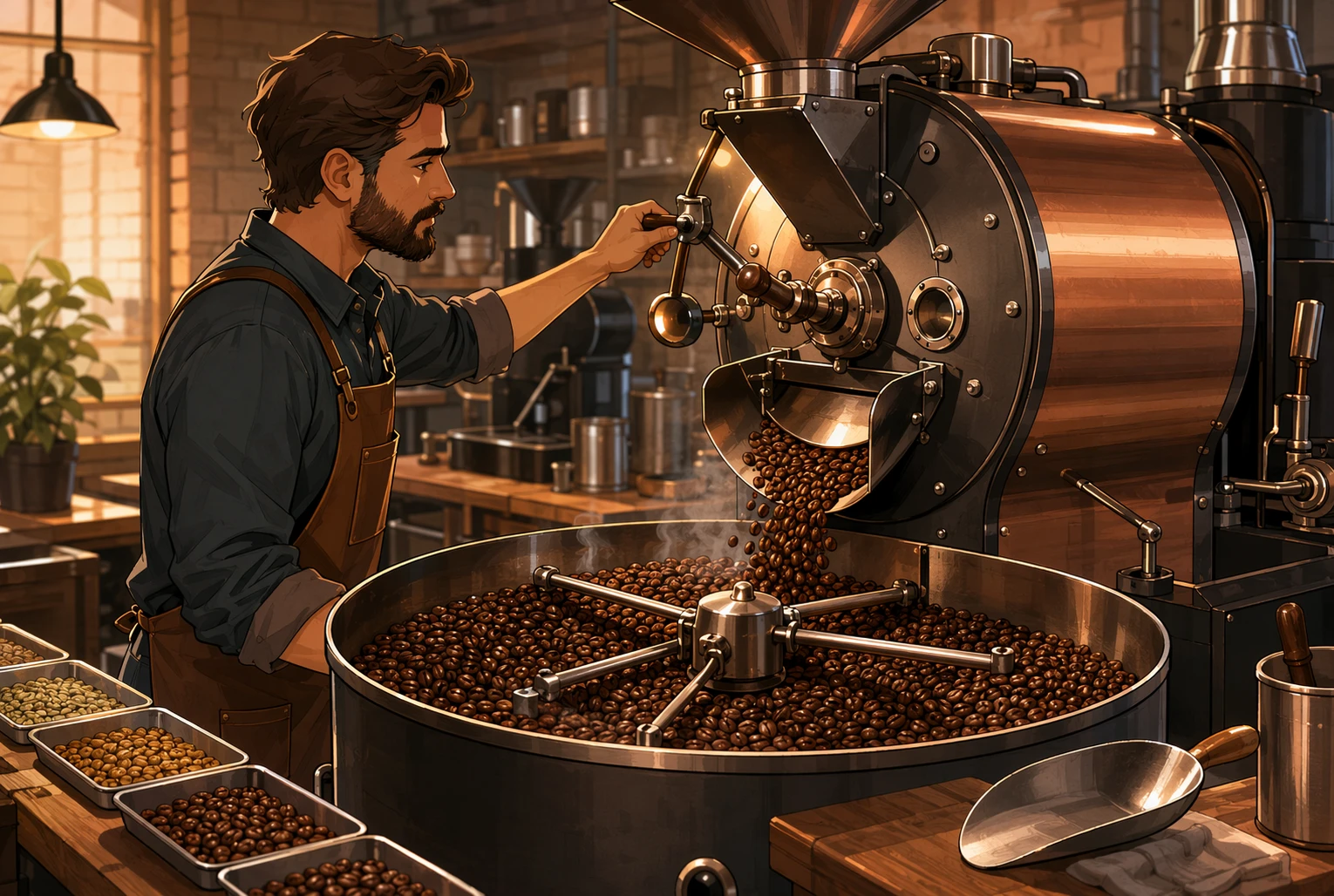
Roaster adjusting airflow beside cooling tray
Airflow, charge temperature, and cooling finish the job.
- Airflow clears smoke and chaff, helping cleaner flavor.
- Charge temperature shapes how fast the bean surface heats.
- Fast cooling stops roast carryover and locks in the target profile.
Small changes here can move a coffee from bright and lively to muted or harsh.
Also Read: https://justroastedcoffee.com/blogs/blog-article-60232
How to Choose the Right Roast Technique for Your Coffee Goal
Match the roast to both the bean and the cup result you want. Research shows longer development pushes coffee toward more roasty, nutty, and bitter notes, while shorter development keeps more fruity, sweet, and acidic character in the cup, according to University of Copenhagen research .
Match roast style to the coffee itself Dense, high-grown coffees usually handle more heat and can keep clarity with lighter or medium profiles. Softer, lower-density beans often taste better with a gentler approach that builds sweetness and avoids harshness.
Match roast style to how it will be served For filter coffee, use lighter development to keep aroma and brightness. For espresso or milk drinks, a slightly longer roast can add body and lower sharp acidity. UC Davis research also notes roast profile shapes acidity during roasting.
Homepage
Taste roast differences for yourself with Just Roasted Coffee . Explore small-batch, carefully roasted coffees and find the flavor profile that fits your palate or café menu.
Frequently Asked Questions
Q1: How do different coffee roasting techniques impact the flavor profile of coffee?
Fast roasting keeps brighter acid and sharper fruit notes. Slower roasting builds more sweetness, body, and roast depth. Drum roasting often tastes rounder, while fluid-bed roasting can taste cleaner and lighter.
Q2: What role does the Maillard reaction play in developing coffee flavor during roasting?
The Maillard reaction creates many of coffee’s brown-sugar, nutty, toast, and cocoa notes. It happens as heat drives sugars and amino acids to react. Good control here shapes sweetness, balance, and aroma.
Q3: How does roast level influence acidity and body in coffee from the US?
Light roasts keep more acidity and origin detail. Medium roasts balance sweetness, body, and brightness. Dark roasts lower sharp acidity and raise bitterness, smoke, and heavier body, which many cafes use for espresso blends.
Conclusion
Coffee flavor changes most through roast color, time, and development. Research shows darker, longer roasts raise bitterness and lower acidity, fruit, and sweetness multi-study findings , while roasting also boosts key aroma compounds like pyrazines 2024 analysis .