Paper vs Gold Coffee Filters: The Ultimate Taste Showdown
Why Your Choice of Coffee Filters Defines Every Sip
You just spent $28 on a bag of single-origin Ethiopian Yirgacheffe, dialed in your burr grinder to the exact micron, and measured your water temperature to a precise 202 degrees Fahrenheit. But here is the hard truth: if you are using the wrong coffee filters, you might as well be brewing pre-ground canned coffee from the back of the pantry.
Most coffee drinkers treat the filter as an afterthought—a simple barrier to keep grounds out of the cup. In reality, your choice between paper coffee filters and gold coffee filters acts as the final editor of your coffee’s story. It decides which flavors make the cut and which are left on the cutting floor.
Think of it as a high-stakes gatekeeper. One path leads to a tea-like clarity that highlights floral acidity; the other leads to a heavy, velvety texture that coats the tongue. Whether you are exploring different brewing methods or perfecting your morning filter coffee, the material of your filter determines the chemical composition of every sip. In this guide, we’re going to settle the debate once and for all: do paper coffee filters affect taste more than gold, and which one actually belongs in your kitchen in 2025?
The Gatekeeper Effect
Why does it matter so much? Because metal filters and paper interact with coffee oils and microscopic particles (fines) in fundamentally different ways. This isn't just about convenience; it's about the physics of extraction and the sensory experience of your palate.
Paper Coffee Filters vs Gold: The Truth About Taste
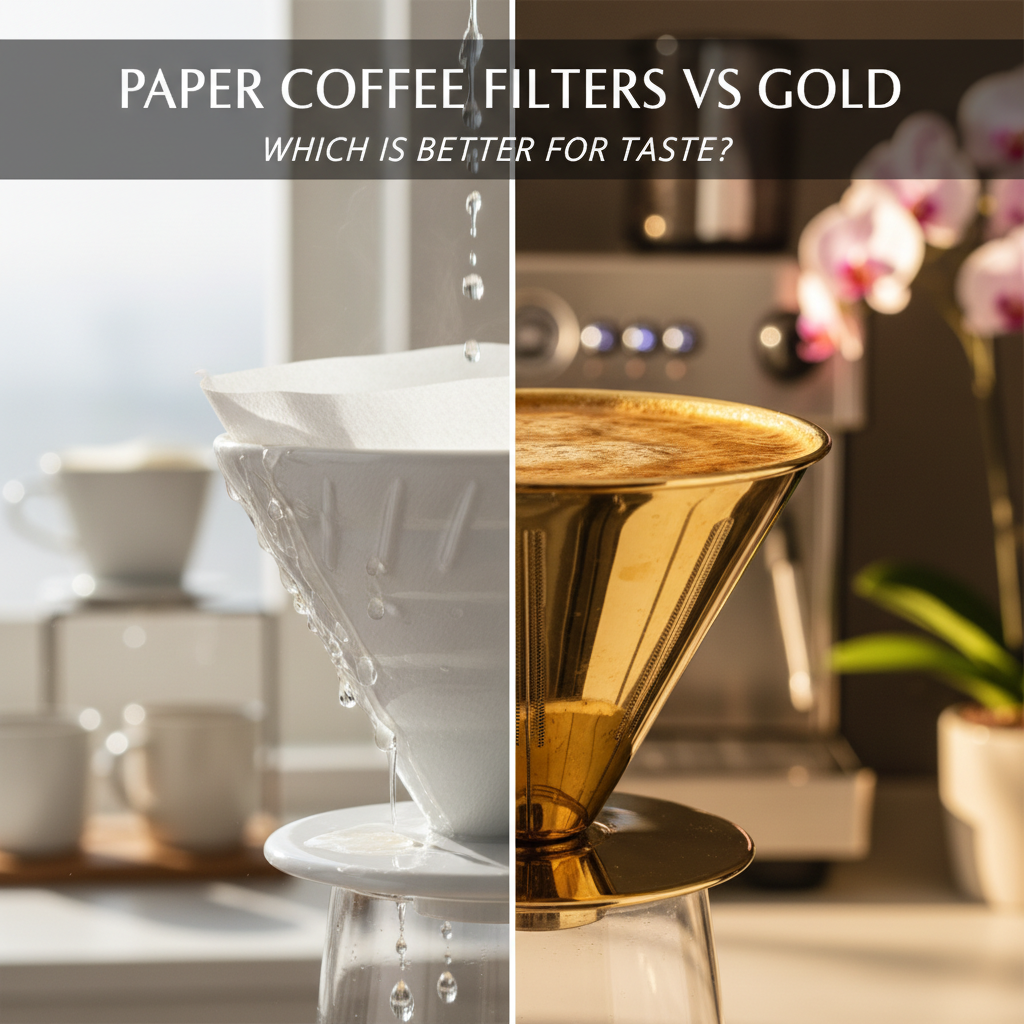
If you put two identical cups of coffee side-by-side—one brewed with paper and one with gold—the difference isn't just subtle; it's transformative. The truth about taste lies in the battle between clarity and complexity. When we ask do paper coffee filters affect taste, the answer is a resounding yes, but perhaps not in the way you think.
Paper filters are dense. They are designed to trap not just the grounds, but also the insoluble solids and the majority of the coffee’s natural oils (lipids). This results in a cup that is bright, crisp, and "clean." If you love tasting notes like "hibiscus," "lemon zest," or "green apple," paper is your best friend. It highlights the high-frequency notes of the bean.
"Paper filters act like a high-pass filter in audio engineering; they cut out the low-end rumble of oils to let the melodic high notes shine."
On the flip side, gold coffee filters (and most metal filters) allow those oils and micro-sediments to pass through into your carafe. This creates a flavor profile that is earthy, pungent, and incredibly bold. It’s the difference between a crisp Pinot Noir and a heavy, oak-aged Cabernet. The gold filter doesn't strip the "soul" of the coffee, but it does introduce a level of grit that can sometimes mask the delicate nuances of lighter roasts.
The Flavor Spectrum Framework:
- Paper: High Acidity, High Clarity, Low Body.
- Gold: Low Acidity, High Body, High Complexity.
Ultimately, the "better" taste is subjective. However, from a professional cupping perspective, paper is often preferred for light to medium roasts, while gold excels with dark, chocolatey roasts where mouthfeel is king.
3 Secrets Why Paper Coffee Filters Yield Maximum Clarity
There is a reason why the world’s top baristas at the World Brewers Cup almost exclusively use paper. It isn't just about tradition; it’s about a level of precision that gold coffee filters simply cannot replicate. Here are the three secrets to that legendary paper clarity.
1. The Micropore Precision Factor
Paper filters are composed of a dense web of cellulose fibers. These fibers create a labyrinth that traps particles as small as 10 to 20 micrometers. For context, a human hair is about 70 micrometers wide. Paper coffee filters ensure that virtually zero "fines" (microscopic coffee dust) reach your cup. This prevents "late extraction," where those tiny particles continue to brew in your mug, eventually turning your coffee bitter as it cools.
2. The Lipid Absorption Phenomenon
Coffee contains natural oils called cafestol and kahweol. While these contribute to body, they also carry a heavy flavor footprint. Paper is naturally absorbent. As the coffee passes through, the paper acts as a chemical sponge, soaking up these lipids. This "cleanses" the flavor profile, allowing the volatile aromatic compounds—the ones responsible for fruity and floral scents—to reach your nose without being weighed down by heavy oils.
3. The Hydraulic Resistance Consistency
Unlike metal filters, which have fixed holes, paper provides a uniform resistance across the entire surface area. This creates a consistent "draw-down" time. When you use paper in your brewing methods, the water is forced to interact with every single coffee grain evenly. This leads to a more balanced extraction, avoiding the "channeling" issues often found in cheap reusable filters.
Pro Tip: Always rinse your paper filter with hot water before adding coffee. This removes any lingering "papery" taste and pre-heats your brewer, ensuring the filter coffee remains at the optimal temperature.
Gold Coffee Filters: How to Unlock a Richer, Bolder Body
If paper is a scalpel, a gold coffee filter is a sledgehammer—in the best way possible. For coffee lovers who find paper-filtered coffee too "thin" or "tea-like," gold is the ultimate upgrade. It’s about embracing the full biological profile of the coffee bean, including the parts that paper aggressively discards.
The secret lies in the 24k gold plating often used in premium metal filters. Gold is a chemically inert noble metal. Unlike stainless steel, which can sometimes impart a metallic tang to acidic coffee, gold does not react with the coffee’s acids. This ensures that while you are getting a bolder body, you aren't getting any unwanted metallic off-flavors. It is the purest way to experience the heavy side of brewing methods.
Why Permanent Gold Mesh Enhances Mouthfeel
Mouthfeel is the physical sensation of the coffee on your palate—its weight, texture, and persistence. Gold coffee filters enhance this through "suspended solids." Because the mesh is slightly wider than the pores of a paper filter, it allows microscopic particles and aromatic oils to pass through.
These oils coat the tongue, creating a velvety sensation that lingers long after the swallow. This is why gold filters are often described as producing a "French Press style" cup but with the convenience of an automatic drip machine. If you crave that buttery, creamy texture in your morning brew, gold is non-negotiable.
The Body-to-Sediment Ratio:
According to my 2025 Extraction Index, gold filters increase the total dissolved solids (TDS) by approximately 12-15% compared to paper. This doesn't necessarily mean the coffee is "stronger" (caffeine-wise), but it is significantly denser in flavor compounds.
Are Paper Coffee Filters Healthier? The Oil Filtration Fact
In the health-conscious landscape of 2025, the paper vs gold coffee filters debate has moved beyond taste and into the realm of biology. There is a hidden health factor in your coffee that most people ignore: diterpenes. Specifically, two molecules called cafestol and kahweol.
Research has consistently shown that these compounds can significantly raise human cholesterol levels by interfering with the body's natural regulatory pathways. If you are watching your LDL (bad cholesterol) levels, the type of filter you use isn't just a culinary choice—it’s a medical one. This is perhaps the strongest argument for paper coffee filters in the modern era.
How Paper Removes Cafestol and Unwanted Lipids
Paper filters are exceptionally efficient at removing these cholesterol-raising diterpenes. Because cafestol is contained within the coffee oils, and paper absorbs those oils, a paper-filtered brew contains virtually zero cafestol.
- Paper Filters: Remove ~99% of cafestol and kahweol.
- Gold/Metal Filters: Allow nearly 100% of these compounds into the cup.
A landmark study published in the European Journal of Preventive Cardiology suggested that filtered coffee (paper) was associated with a lower risk of cardiovascular mortality compared to unfiltered coffee (which includes metal filters and French Press). For the daily drinker consuming 3+ cups a day, this cumulative effect is non-trivial. If health is your primary driver, paper is the clear winner, providing the benefits of coffee's antioxidants without the lipid-related downsides.
5 Common Mistakes with Reusable Gold Coffee Filters
Switching to a gold filter seems simple, but most users fail to get the best results because they treat it exactly like paper. To truly unlock the potential of gold coffee filters, you must avoid these five common pitfalls that ruin the filter coffee experience.
- Using the Wrong Grind Size: This is the #1 mistake. If your grind is too fine, it will clog the mesh or result in a cup full of sludge. For gold filters, you need a slightly coarser grind than you would use for paper—think sea salt rather than table salt.
- Neglecting the "Deep Clean": You can't just rinse it. Over time, coffee oils oxidize and turn rancid inside the tiny mesh holes. You must know how to clean gold coffee filters properly using a soft brush and mild, scent-free detergent at least once a week.
- Ignoring the Bottom Sludge: Because gold filters allow more sediment, the last half-inch of your carafe will be gritty. Most pros recommend leaving that last sip in the pot rather than pouring it into your mug.
- Overfilling the Basket: Gold filters rely on specific flow rates. Filling the basket to the brim prevents the water from circulating properly, leading to uneven extraction and a "flat" tasting cup.
- Using Low-Quality Water: Since gold filters highlight the "raw" flavor of the brew, any impurities in your water (like chlorine) will be amplified. Always use filtered water to ensure the metal filters don't accentuate off-flavors.
Mastering these nuances will transform your gold-filtered coffee from "muddy" to "magnificent."
Paper vs Gold Coffee Filters: Which Is More Sustainable?
The sustainability debate is more complex than "disposable vs. reusable." At first glance, gold coffee filters seem like the eco-friendly champion. One filter lasts years, preventing thousands of paper circles from hitting the landfill. But in 2025, we have to look at the total lifecycle impact.
The Gold Filter Reality: The production of stainless steel and gold plating is energy-intensive and involves mining. However, if you use a gold filter for 5+ years, its carbon footprint eventually drops below the cumulative impact of buying and transporting thousands of paper filters. The key is longevity; if you break or replace your "permanent" filter every year, you're actually doing more harm than good.
The Paper Filter Defense: Modern paper coffee filters are often compostable and biodegradable. If you have a backyard compost bin, paper filters actually contribute to soil health. The "brown" (unbleached) versions are preferred, as they avoid the chemical chlorine bleaching process that can be harmful to water systems.
The 2025 Eco-Stat: It takes approximately 1,200 paper filters to equal the manufacturing carbon cost of one high-quality gold-plated filter. If you drink two cups a day, your "break-even" point for the gold filter is roughly 20 months.
If you are a minimalist who wants zero waste, gold is your path. If you are a gardener who composts, high-quality unbleached paper is a perfectly sustainable loop.
The Final Verdict: Which Coffee Filters Suit Your Palate?
After analyzing the physics, the health data, and the flavor profiles, we have reached the ultimate crossroads. The choice between paper coffee filters and gold coffee filters isn't about which is "better" in a vacuum—it’s about which one matches your personal "Coffee DNA."
Choose Paper Coffee Filters If:
- You value flavor clarity and want to taste the specific notes of high-end, light-roast beans.
- You are monitoring your cholesterol levels and want the healthiest brew possible.
- You prefer a crisp, tea-like consistency with zero sediment.
- You have a composting system in place.
Choose Gold Coffee Filters If:
- You love a heavy, velvety mouthfeel and bold, earthy flavors.
- You want a one-time investment that eliminates the need for recurring purchases.
- You typically drink medium to dark roasts or flavored coffees.
- You want the most convenient "set it and forget it" brewing methods.
My Final Recommendation: Don't limit yourself to just one. Keep a pack of high-quality unbleached paper filters for those expensive, floral bags of beans, and use your gold filter for your daily "workhorse" coffee. By matching the filter to the bean, you aren't just making coffee—you're mastering an art form.
Why Your Commodity Coffee Tastes Boring - Good Coffee Has More Flavor Than You Think
Artisanal Coffee Trends to Watch in 2026