Buying Locally Roasted Coffee in NJ: Freshness Guide
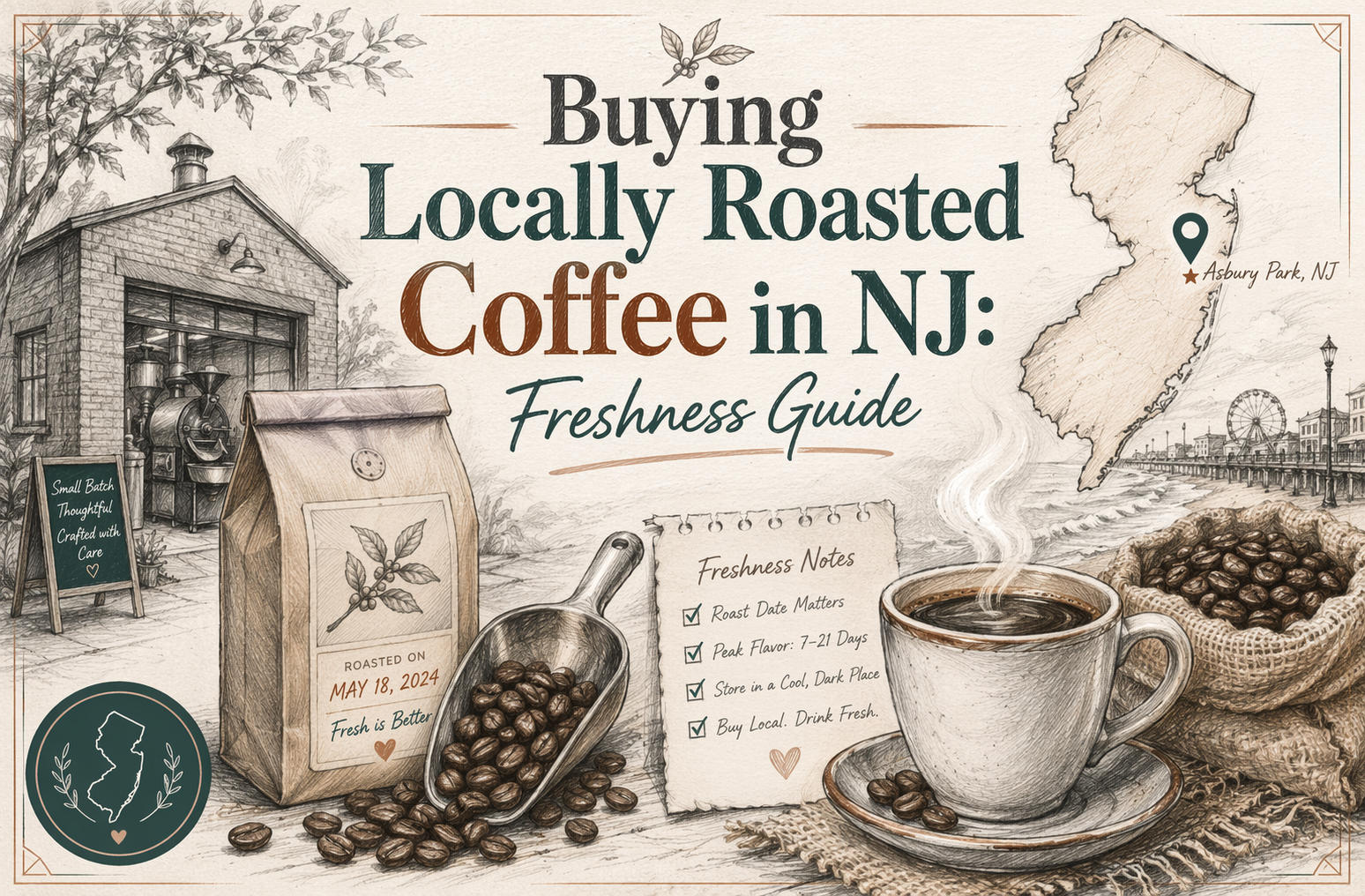
Buying Locally Roasted Coffee in NJ: Freshness Guide
Quick Summary: The key to buying fresh locally roasted coffee in NJ is checking the roast date on the packaging, not just the "fresh roasted" label. Whole beans with a clear roast date usually taste better and stay fresh longer than pre-ground coffee. Store beans in airtight, opaque containers away from heat and light, and buy smaller amounts to keep them fresh. If you buy Fresh Coffee NJ and the bag only says "fresh roasted," you still do not know how fresh it is. That gap trips up home brewers, gift buyers, and even NJ Coffee Shops. This guide shows how to judge Fresh Coffee NJ by roast date, bag info, and seller habits. It draws on real buying standards used across Artisan Coffee NJ and helps you compare Fresh Coffee NJ with less guesswork.
Table of Contents
What Makes Locally Roasted Coffee Taste Fresher
Roast date versus best-by date
A local roast usually tastes fresher because you can track its real age. The roast date tells you when flavor started peaking. A best-by date mostly tells you shelf life, not taste. Trade notes that roast date is the better freshness marker because it shows where the beans sit on the flavor curve Trade’s roast date guide .
- Look for a clear roast date
- Choose whole beans over pre-ground
- Skip bags with only a best-by date
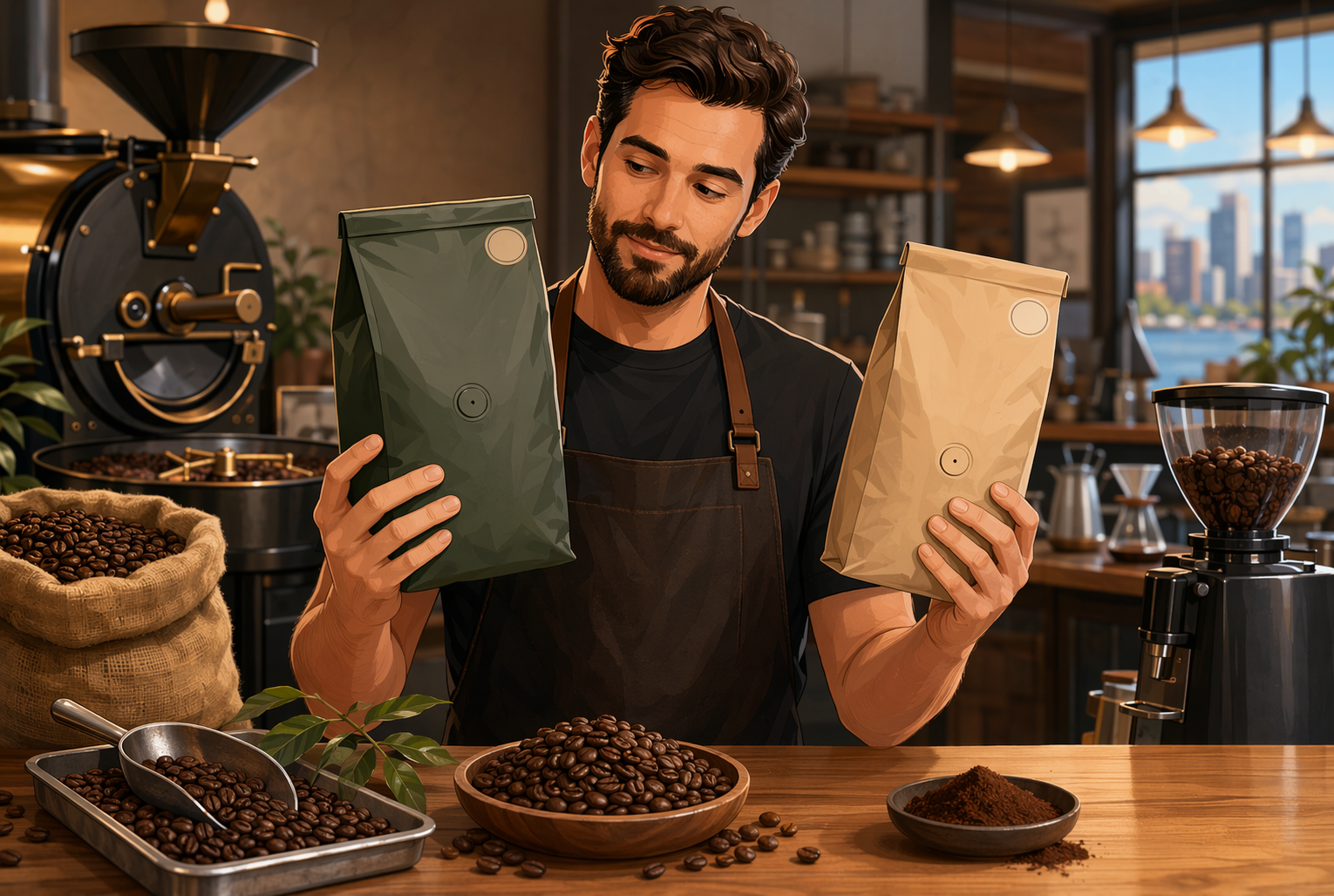
Barista comparing coffee bags with roast and best-by dates
If a NJ roaster prints the roast date clearly, that is usually a good sign.
Why fresh beans still need a short rest
Fresh coffee is not always best on day one. Roasting traps carbon dioxide inside the bean, and that gas escapes over time. A peer-reviewed study found CO2 release is a key part of freshness, shelf life, and extraction coffee degassing research .
- Rest most filter coffee a few days
- Rest espresso a bit longer
- Brew too soon and the cup can taste sharp or uneven
Good local roasters sell coffee fresh, but also expect it to rest briefly before peak flavor.
How to Read NJ Coffee Packaging Like a Pro
A good coffee bag should help you judge freshness fast. Read the front for basics, then flip it over for proof.
What a transparent roaster should show
- Roast date, not just a vague best-by date
- Coffee identity like whole bean or ground, plus net weight, which the FDA labeling guide requires on food packages
- Origin details such as country, region, or farm
- Process and roast level so you know what flavor to expect
- A one-way valve on many whole bean bags, since roasted coffee releases CO2 after roasting and packaging helps protect aroma, as shown in coffee packaging research
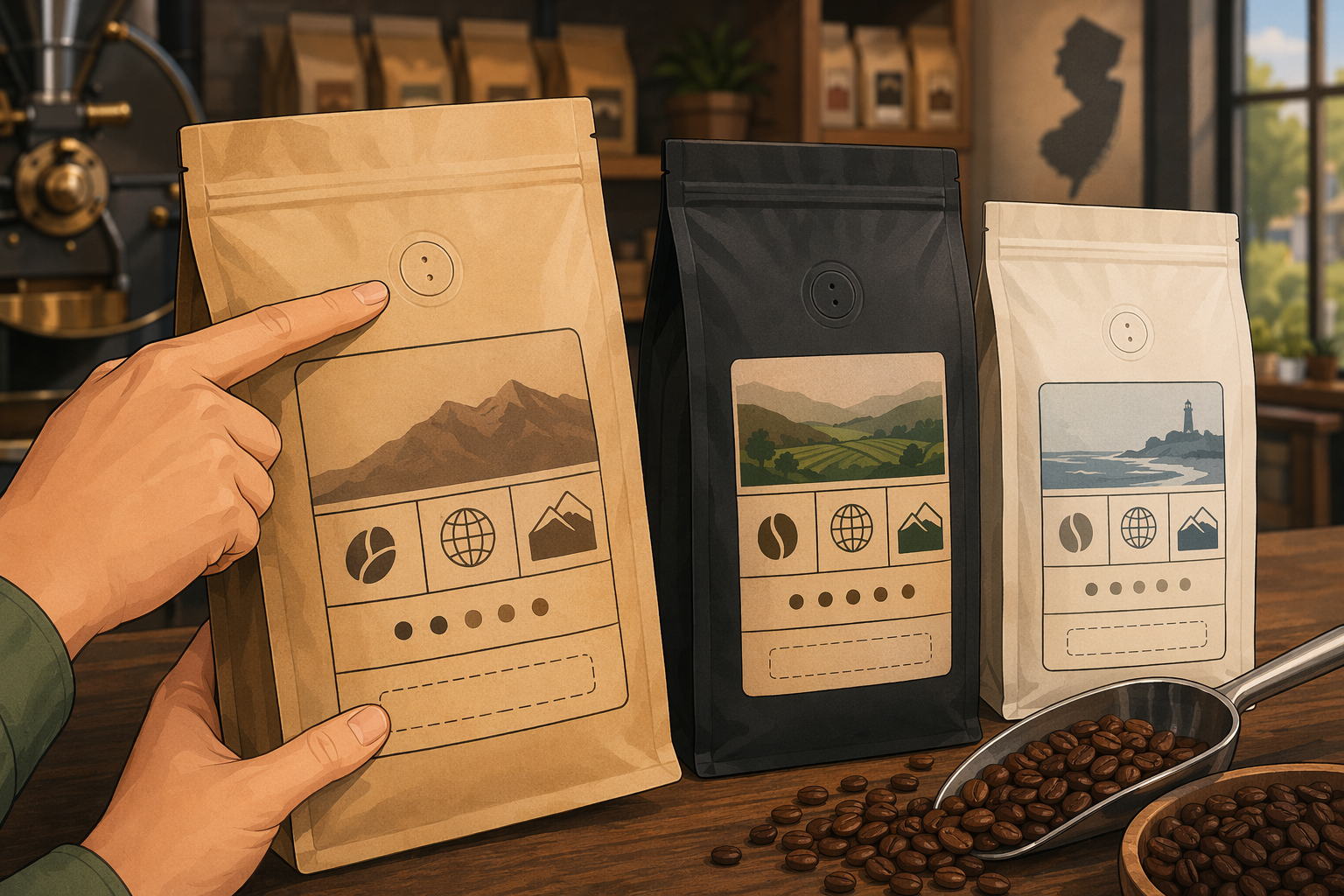
Close-up of sealed coffee bags with valve and roast date
Pick roasters that make freshness easy to verify.
Red flags that suggest stale coffee
- No roast date anywhere
- Only a long best-by window
- “Fresh roasted” claims with no real detail
- Ground coffee with thin, non-resealable packaging
- Oily beans in the bag window, unless it is a very dark roast
How to Choose the Right NJ Roaster or Coffee Shop
Pick a roaster that shows a real roast date, not just a best-by date. Fresh local coffee usually beats older shelf coffee on flavor, and the shortest path from roaster to cup matters.
Watch
Best options for home brewers
- Look for whole bean, clear roast dates, and brew help.
- Ask when the coffee was roasted and which bag fits drip, pour-over, or espresso.
- Shops like Just Roasted Coffee make sense if you want small-batch coffee and a simple path to fresher beans.
A coffee bag with a roast date gives you more buying confidence than one with only a best-by date, as explained in this coffee bag label guide .
Best options for cafés and small businesses
- Choose roasters that can keep supply steady, answer fast, and match your menu.
- Ask about delivery schedule, grind options, training, and wholesale consistency.
- A good partner helps you avoid dead stock and keep coffee tasting fresh week to week.
How ethics and freshness can work together
- Fresh coffee and ethical sourcing are not opposites.
- Look for roasters that share origin details and trusted standards.
The Smithsonian says Bird Friendly® coffee is the only 100% shade-grown and 100% organic coffee certification, which helps buyers pair values with quality: Bird Friendly Coffee Program .
How to Keep Fresh Coffee Fresh After You Buy It
Store coffee like food, not decor. The goal is simple: keep beans away from air, light, heat, and moisture. The National Coffee Association recommends an airtight, opaque container in a cool, dark spot. Skip the counter by the stove, dishwasher, or sunny window.
Clear jars look nice, but they speed up staling if they sit in light.
Grind only what you need right before brewing. Whole beans hold flavor longer than ground coffee because less surface area hits oxygen. Research on opened coffee storage found that storage method changes how fast freshness drops after opening, with better-sealed packaging performing best in coffee storage testing .
- Buy smaller bags
- Keep beans sealed tight
- Use ground coffee fast
Homepage
Ready to buy fresher coffee in NJ? Shop Just Roasted Coffee for small-batch beans with local care, clear quality, and better flavor.
Frequently Asked Questions
Q1: What factors determine the freshness of locally roasted NJ coffee?
Freshness depends on roast date, bag seal, storage, and bean type. Most beans taste best 5 to 21 days after roast. Heat, light, and air speed up staling.
Q2: How can I identify the roast date on NJ coffee packaging?
Look for a clear roasted on date, not just a best-by date. Check the bag back, bottom, or side label. Skip bags with no roast date.
Q3: Which NJ coffee shops and roasters offer the freshest locally roasted beans?
Start with roasters that print roast dates and sell fast turnover. Ask when the batch was roasted. Small-batch sellers like Just Roasted Coffee often make freshness easier to verify.
Conclusion
Buy NJ coffee by roast date, not hype. Freshness drops as oxygen, heat, and grinding speed staling, per the Specialty Coffee Association and a 2025 packaging study . Favor recent whole beans, strong bags, and local turnover.