Coffee Roasting Levels: Light, Medium, and Dark Explained
Quick Summary: Light roasts preserve the bean’s original flavors with bright acidity and floral notes, while medium roasts balance sweetness and body, and dark roasts emphasize bold, smoky flavors with less acidity. The roast level mainly depends on how far heat has changed the bean, not just its darkness. Your brewing method and taste preferences should guide your choice, with lighter roasts suited for pour-over and filter methods, medium for versatility, and dark for bold, full-bodied drinks. Labels vary, so it's best to read tasting notes and buy small batches to find what suits you.
One roaster’s Medium Roast Coffee can taste bright and tea-like, while another tastes like chocolate and toasted nuts. That gap confuses buyers, coffee enthusiasts, and café owners trying to compare bags and brew better. This guide clears up Coffee Roasting Levels with plain, practical advice on flavor, aroma, brew fit, roast labels, and caffeine myths. It also shows how Light Roast Coffee and other Coffee Roasting Levels differ, based on real buying and tasting cues.
Table of Contents
How Coffee Roast Levels Are Defined
Roast level is mostly about how far heat has changed the bean, not just how dark it looks.
In roasting, green coffee loses moisture, expands, and goes through chemical reactions that build aroma, sweetness, and body. The process also breaks down some acids and sugars as the roast moves darker. According to Wikipedia’s coffee roasting overview , roasting changes both the bean’s physical and chemical properties, which is what creates the taste people know as coffee.
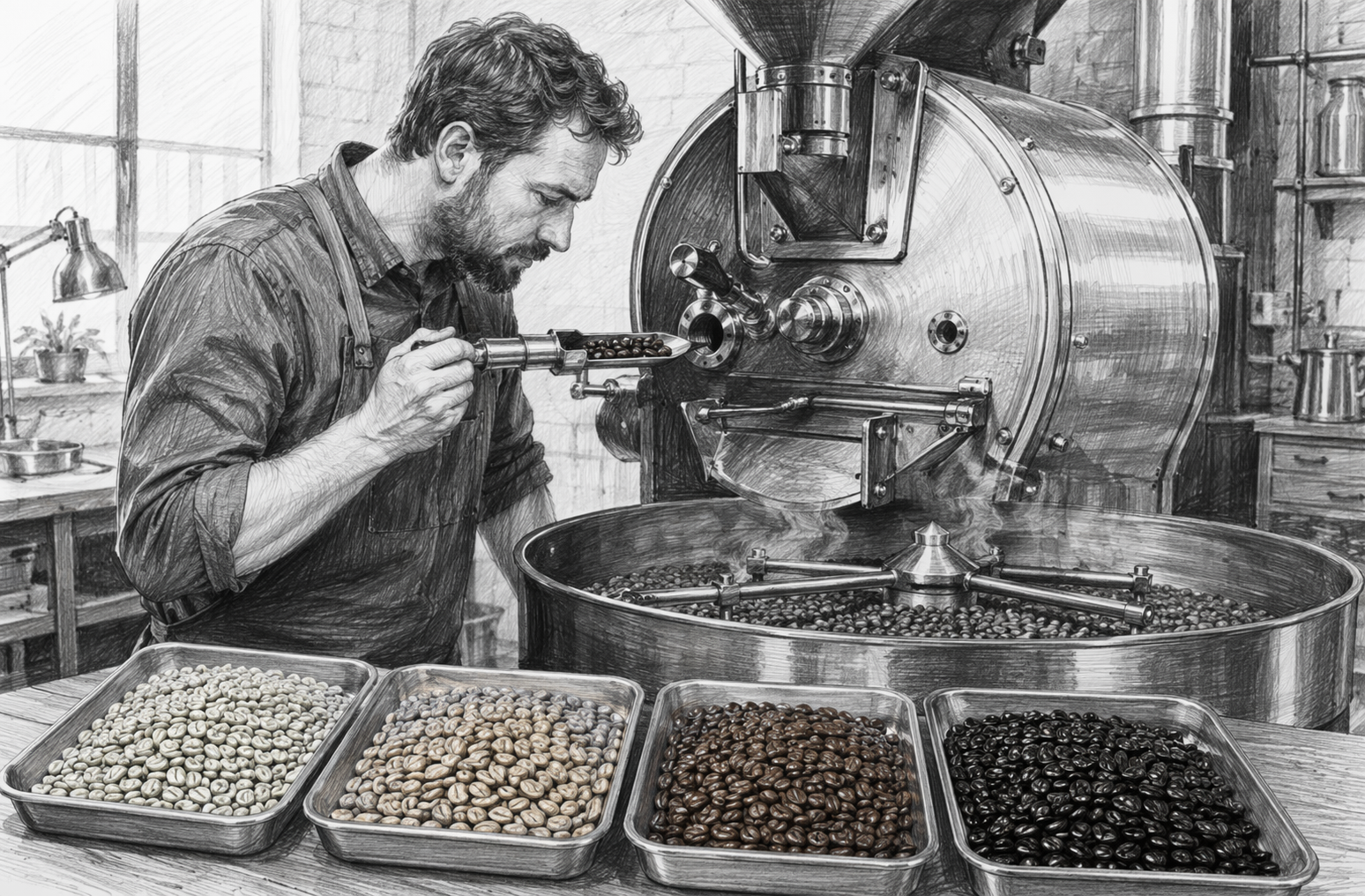
Roaster inspecting green to brown coffee beans
Roasters often use cues like color, time, temperature, first crack, and second crack to define light, medium, and dark.
Labels still vary because the industry has not fully settled on one plain-language standard. The Specialty Coffee Association notes that a roast level designation standard is still in development, so one roaster’s medium may look or taste closer to another roaster’s light-medium.
A roast label is a useful guide, not a universal rule.
Light, Medium, and Dark: Flavor, Aroma, and Body Differences
Light roast coffee keeps more of the bean’s original character. You’ll usually taste brighter acidity, clearer fruit, floral notes, and a lighter, tea-like body. The National Coffee Association says lighter roasts preserve more of a coffee’s unique qualities, which is why single-origin buyers often start here when they want to taste origin first, roast second NCA roast guide .
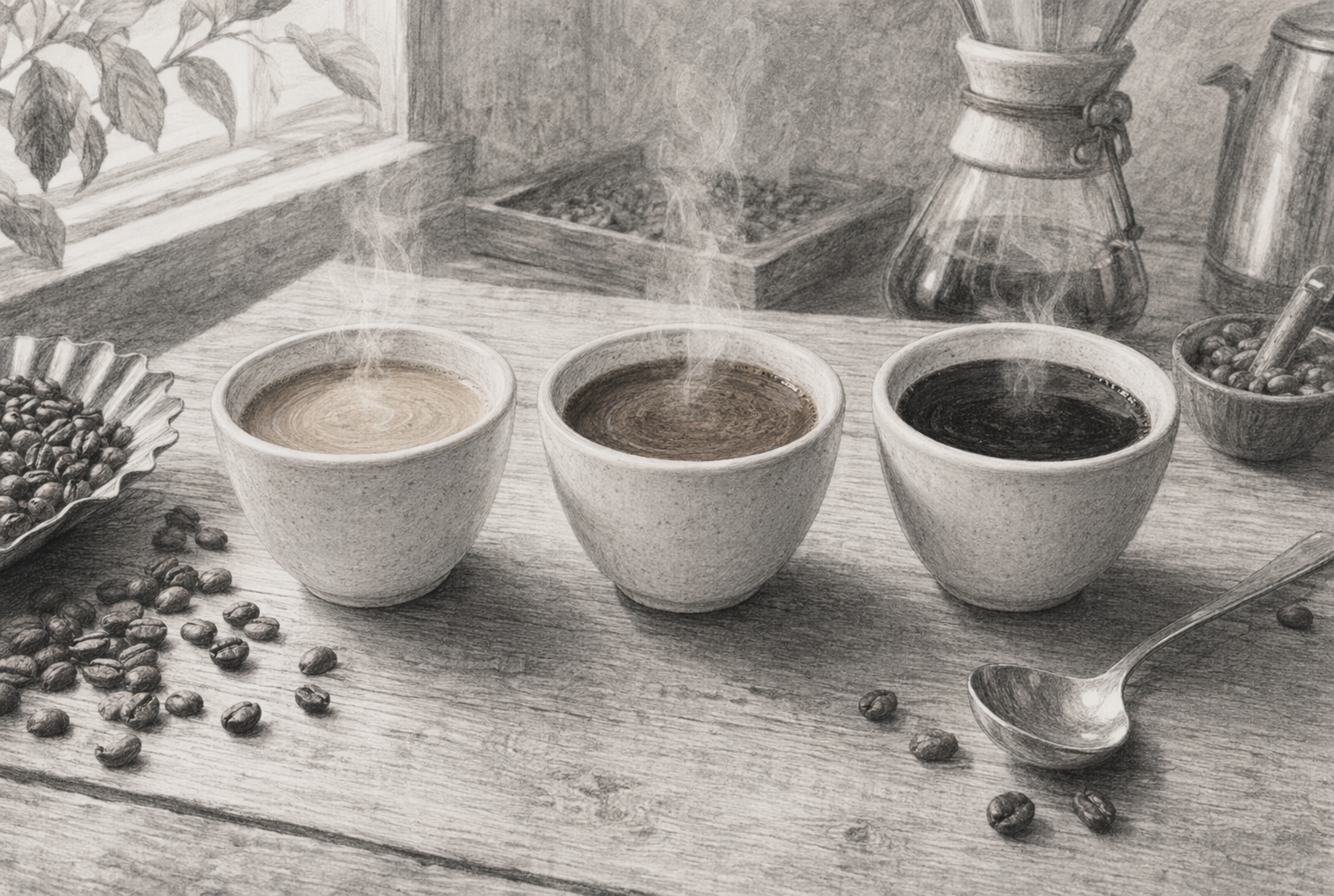
Three coffee cups with varying roast levels on tasting table
Medium roast coffee sits in the middle and feels the most balanced. Expect caramel, nuts, cocoa, and softer fruit with a rounder aroma and medium body. Research on aroma-active compounds found medium roast linked with pleasant notes like sweet, toasted hazelnut, and caramel, which helps explain why it works well for both filter and espresso coffee aroma study .
Dark roast coffee pushes roast flavor to the front. You get lower acidity, heavier body, and bolder notes like dark chocolate, smoke, spice, or bittersweet toast. Origin details fade, while roast character becomes the main story.
Which Roast Works Best for Your Brew Method
Match roast level to how your brewer pulls flavor. Research shows brewing method shapes sensory results and extraction more than roast level alone, while roast still changes taste direction in the cup according to PubMed .
Watch
- Choose light roasts for clarity and complexity: Use them for pour over, Chemex, and AeroPress when you want bright acidity, floral notes, and origin detail. The SCA also notes brewing standards vary by method, so clean filter setups help light roasts shine see SCA standards .
- Choose medium roasts for versatility: Pick them for drip coffee, batch brew, AeroPress, and espresso. They balance sweetness, body, and acidity, so they work well if you want one bag for both black coffee and milk drinks.
- Choose dark roasts for boldness and body: Use them for French press, moka pot, espresso, and cold brew. They taste heavier, lower in acidity, and more bitter-sweet, which fits stronger, richer cups.
How to Choose the Right Roast for Your Taste and Buying Goals
Match roast to the flavor you want. Pick light roast if you like bright, fruity, or floral notes. Pick medium roast for a balanced cup with sweetness and body. Pick dark roast if you want bold, smoky, bittersweet flavor. The NCA notes that lighter roasts keep more origin character, while darker roasts lean more on roast taste NCA roast guide .
Read the bag like a shopper. Check the roast level first, then look for tasting notes, origin, and brew suggestions. Roast names are not fully standard across the trade, so one roaster’s “medium” may taste darker than another’s, as the Specialty Coffee Association explains . > Buy one bag at a time and keep notes.
Homepage
Not sure which roast fits your taste or café menu? Try small-batch options from Just Roasted Coffee and buy with more confidence.
Frequently Asked Questions
Q1: What are the main differences between light, medium, and dark coffee roasts in flavor and aroma?
Light roasts taste brighter and more acidic, with floral or fruit notes. Medium roasts feel more balanced, with sweetness and nutty or chocolate hints. Dark roasts taste bolder, smokier, and less acidic, with heavier body and roast-driven aroma.
Q2: How does roast level affect caffeine content and brewing methods for coffee enthusiasts?
Roast level changes caffeine less than most people think. Scoop for scoop, light roast may have slightly more. Light roasts work well for pour-over. Medium roasts fit most brewers. Dark roasts often suit espresso, moka pot, and French press.
Q3: What is the roasting process’s impact on coffee flavor profiles and body for connoisseurs and casual drinkers?
Roasting turns raw bean sugars and acids into aroma, sweetness, bitterness, and body. Shorter roasts keep origin character clearer. Longer roasts mute some origin notes and add toast, cocoa, or smoke flavors, while body often feels fuller and texture more rounded.
Conclusion
Light, medium, and dark roasts change flavor, body, and brew fit more than quality. Roast labels still vary by seller, and SCA notes no agreed standards , while recent research shows caffeine differences depend heavily on extraction .